Dubai is more than just a city; it is the result of someone’s dream. This dream has made itself stand as a global symbol of innovation by fulfilling all the smart initiatives.
Now, Dubai is pushing its boundaries with the adoption of Artificial Intelligence across several sectors and transforming the way its population interacts with technology. In the heart of this transformation lies the AI-powered mobile apps.
These are more than just apps; they are the intelligent digital tools that predict needs, automate tasks, personalize experiences, and more that may not be imagined. From healthcare to government services, the AI mobile apps have redefined the whole of Dubai.
In this blog, you will get to explore in detail how the businesses in the smart city can harness the power of AI to thrive.
The Rise of AI In Mobile Applications
The power of AI has revolutionized the landscape of mobile apps in the UAE. The mobile app with AI has become a practical tool rather than a futuristic concept for the businesses of the UAE, which brings great advantages.
This revolutionary addition helps businesses to analyze vast amounts of data in real time, which enables them to learn about user behavior in more detail. This adoption helps businesses to offer a hyper-personalized experience to their valuable customers.
The AI in mobile apps that takes into account daily use empowers the search engine of a streaming device to offer the benefit of hyper-personalization to users. Moving forward, it offers smart route navigation in mapping apps and helps to detect fraud smartly in the banking app.
Thus, the rise in the use of AI-powered mobile apps helps businesses to set a new standard in the UAE by establishing a competitive edge. This allows businesses to deliver functionalities that are smarter, faster, and more engaging.
The Core Capabilities of the AI-powered Smart Apps
To form a better understanding of the rise of AI mobile apps in Dubai, you must know the core capabilities of these apps. This will also define the exact reason behind why more businesses in Dubai are inclining towards embracing this smart addition into their apps.
The list of core capabilities of the AI-powered smart apps has been explained below. Take a look.
● Predictive Intelligence

Predictive intelligence refers to the process that uses required smart technologies to predict future outcomes, behavior, or trends with a high level of accuracy. For example, in the case of a delivery app, it will adjust the delivery time by pre-analyzing live traffic to make a timely delivery.
● Task Automation
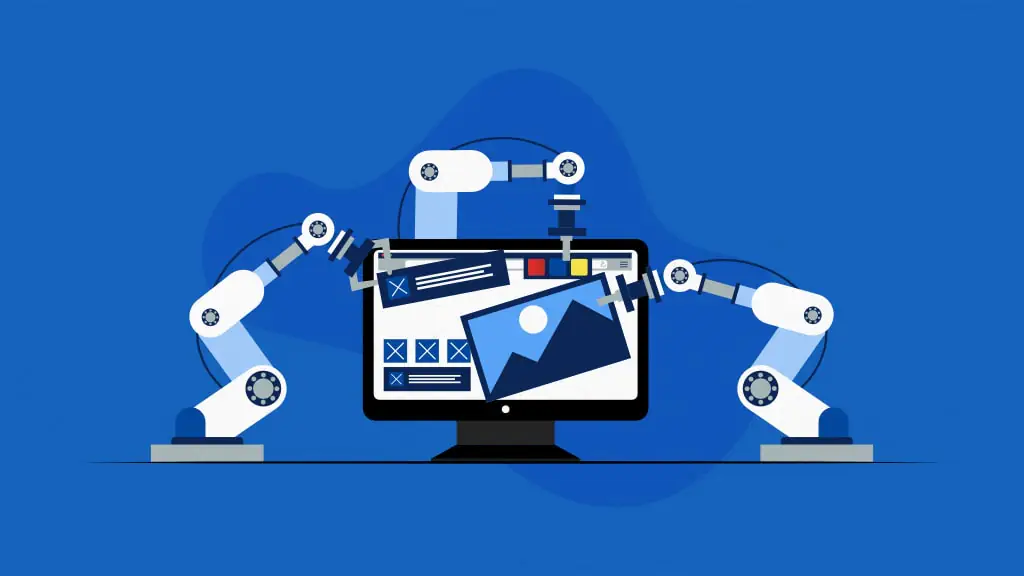
Task automation includes the use of smart technologies that can make repetitive, rules-based, or time-consuming tasks of businesses more seamless. It will help businesses save bucks by not hiring unnecessary human resources.
When businesses run on automation, it will save time, reduce errors, and boost efficiency.
● Personalized Recommendation
Personalized recommendations have become a boon for both party businesses and customers. AI integration in mobile apps suggests products, content, or services tailored to customers’ preferences, behaviors, and needs.
This helps businesses to customize recommendations, which improves the overall user experience.
● Multi-Faceted Interaction
Multi-faceted interaction in an app makes sure that it can communicate with the vast population of Dubai through different modes of communication.
The app must be able to speak with the users through speech, text, touch, gesture, vision, and biometric signals at the same time. This offers users a more natural, flexible, and intuitive user experience.
The Market Outlook of the AI-powered Apps Market in Dubai
The adoption of AI to create smart apps in the UAE is rapidly increasing. This smart adoption is driven by National AI strategies and smart city initiatives. This expansion can be seen across diverse sectors in the UAE.
We will now look into the reports that will talk in favour of the above claims.
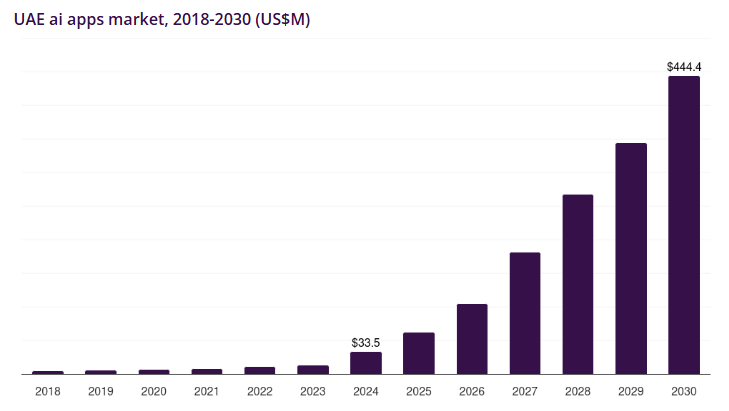
- In the year 2024, the AI application market of the UAE was valued at $33.5 million.
- It is expected that, by the year 2030, the AI application market of the UAE will reach the value of $444.4 million.
- Between 2025 and 2030, which is the forecast period, the AI application market of the UAE will increase at a CAGR of 48%.
- By 2030, it is expected that the broader AI market of the UAE will reach the value of $46.3 billion. Thus, the experts expected that AI would contribute nearly 14% to the GDP of the UAE.
- As per the data of August 2025, about 80% of the UAE professionals use AI tools every day. This rate has increased by 56% since 2024. UAE bags the second-highest adoption rate of AI.
- In the last two years, 65% of the IT professionals in the UAE increased the adoption of AI.
- In 2023, it was seen that 42% of the companies in the UAE adopted the power of AI for their business operations.
- Since the year 2020, the investment in AI technology has increased by more than 300% in the whole UAE, and it is expected that the investment will surpass the amount of $3.2 billion by the year 2024.
Thus, the above statistics clearly state that if you are planning to work on AI-powered mobile app ideas for your business, it is high time you get started with it.
What’s Fueling the Adoption of AI in the UAE?
What is the reason behind the rise in the use of AI in mobile apps in Dubai? A very common question that must be revolving around your mind. The government of the UAE and its smart city initiatives encouraged businesses across the country to support AI.
The future of mobile apps in Dubai is in the hands of artificial intelligence. For this, the groundwork is laid by the transformation programs of the UAE government. Let’s check them out.
➔ UAE National AI Strategy 2031
The aim of the UAE National AI Strategy 2031 is to integrate the power of AI across various industries. This will help the government boost the AI-powered economy in the UAE and create a strong ecosystem that helps it to generate $91 billion.
This will encourage the UAE to fulfill its aim and become a global leader in artificial intelligence by the year 2031. It encourages the adoption of AI in healthcare, education, transportation, and other key areas.
➔ Smart Dubai & Smart Abu Dhabi
The Smart Dubai & Smart Abu Dhabi initiative was launched in 2014. This program has encouraged the launch of more than 130 AI-driven services across various industries like transportation, governance, safety, and citizen engagement.
This involved creating AI-powered chatbots for government services, a digital ID verification system, IoT and AI-based real-time traffic and environment monitoring, and a city-wide blockchain strategy.
➔ AI Sandbox Environment and Regulations
With the adoption of AI to create apps, data usage and privacy have become sensitive concerns. This has encouraged the government of the UAE to create a sandbox ecosystem.
It is a controlled digital space that is used by startups and enterprises to test their AI apps and models without facing any kind of regulatory delays to encourage experimentation. The sandboxes are beneficial, especially for fintech, healthtech, cybersecurity, automation, mobility, and fraud detection industries.
Furthermore, these government programs were not only beneficial for the businesses but also gave an opportunity for the mobile app startups in the UAE to thrive.
The Key Benefits of Adopting an AI-powered Mobile Application
Integrating AI in mobile apps is not just about fulfilling the government’s aim to become a global leader in AI or just following the trends; it is more than that. This initiative will mainly help businesses to strengthen their future growth and stand out in the competitive crowd.
The role of AI in mobile apps brings several advantages for businesses in the UAE. Let’s give a brief look at them, which we have listed below.
♦ Improve Operational Efficiency
Integrating the power of AI in an app helps businesses to work in automode. All the repetitive tasks can be done by artificial intelligence seamlessly, which includes managing customer support via chatbots to data entry and analysis work.
The power of AI cuts out the need for human intervention to do various tasks, improving the operational efficiency of businesses.
♦ Boost User Experience
The AI for mobile apps brings the benefits of hyper-personalization, which today is a crucial element to earn the trust of customers.
The AI-powered app can analyze the sensitive user data, which includes user behavior, mood, search history & others to offer a tailored choice of content, products, and services. It helps users to foster a strong connection with brands.
♦ Unique Personalization
As said, personalization is an excellent offering of AI in an app, but additionally, it offers unique personalization through push notifications.
Every notification sent by the AI-powered app will be dedicated especially to you. Suppose an eCommerce app analyzes your search history and wish list to offer you a promo code or a slash sale on that particular product.
♦ Cut Costs and Increase Revenue
Build a mobile app in Dubai, integrating AI if you want to cut operational costs and earn higher business revenue. Yes, the smart apps powered by AI lower the chance of error rates as there will be minimal human intervention.
So, since there will be no investment in human resources, it will cut costs, improve the target reach, and minimize waste, which boosts ROI.
♦ Provide Real-Time Insights
The mobile apps with AI have the magical ability to read all the relevant data of the app. The AI can monitor the user activity, performance of the products, and real-time business KPIs.
Businesses can access all the advanced data analytics that help them make faster, practical, data-driven decisions that help them climb the stairs of competitive growth.
♦ Strong Security System
The best thing about the power of AI is that it can keep all the crucial data locked and secure in a protective locker. AI efficiently handles all the sensitive data, from users to businesses, and it has become the top priority with the increase in cybersecurity concerns.
The power of AI applies the best practices for data protection and implements strong security measures.
How to Implement AI in a Mobile App?
So, you are concerned about how you can implement the power of AI in your app to make it smarter. The best solution for that is taking the help of different technologies that take the process of integrating AI in mobile apps to another level.
You can also hire mobile app developers who come with the expertise to use these technologies. Their professional skills and expertise enhance code generation, improve app testing, and carry out the development process more efficiently.
We have mentioned below the core technologies that empower the implementation of AI in a smart app.
1] Machine Learning (ML)
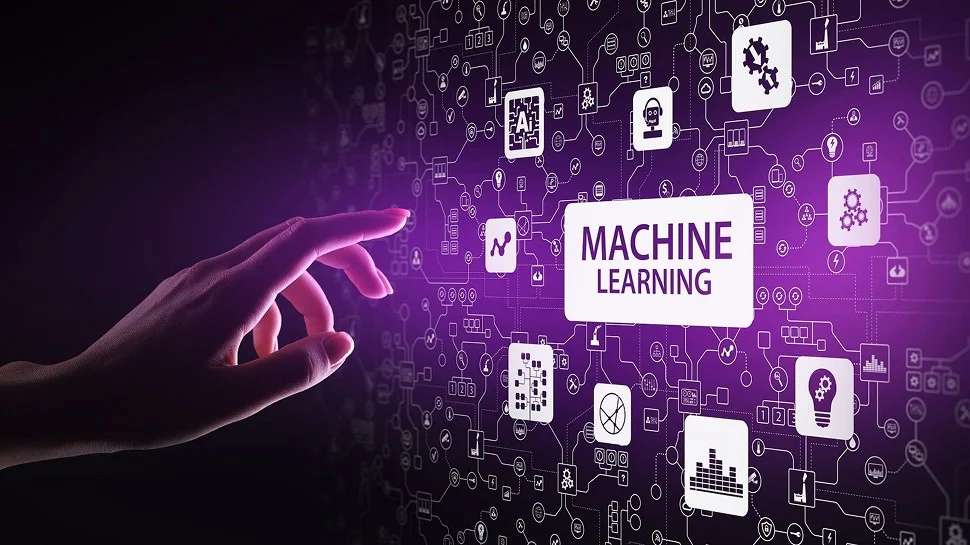
Machine Learning, which is commonly known as ML, is one of those technologies. This will allow the machine or the app to learn from the available internal data without the help of additional instruction.
ML technology just works as per its prediction and makes a decision based on the training.
2] Natural Language Processing (NLP)
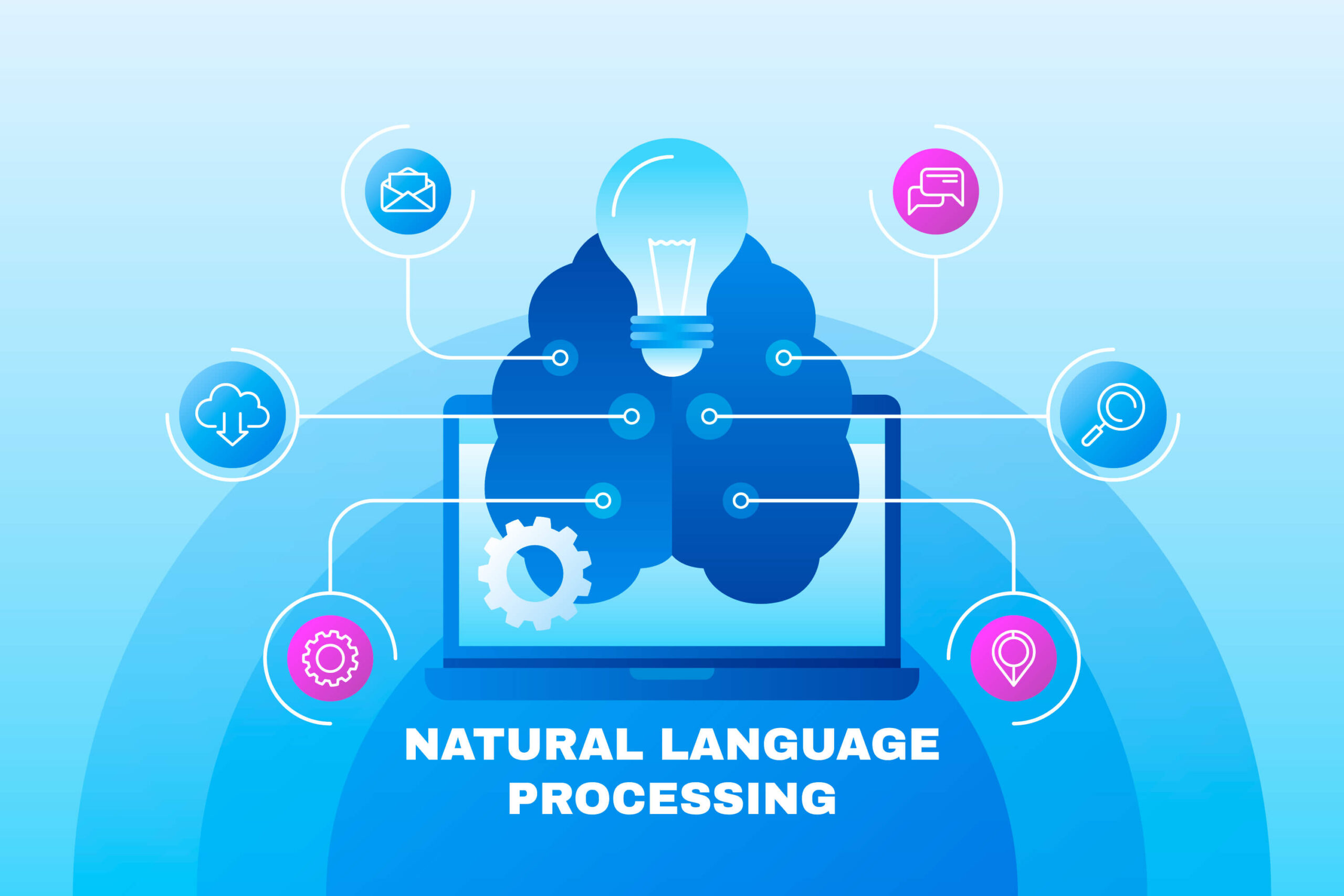
Natural Language Processing, or broadly called NLP, is also used in the integration of AI in mobile apps. As per this technology, the app will be able to recognize speech, texts, and other human sentiments and automatically translate them.
This technology focuses on how the computer learns, then understands and replies to human language.
3] Deep Learning (DL)
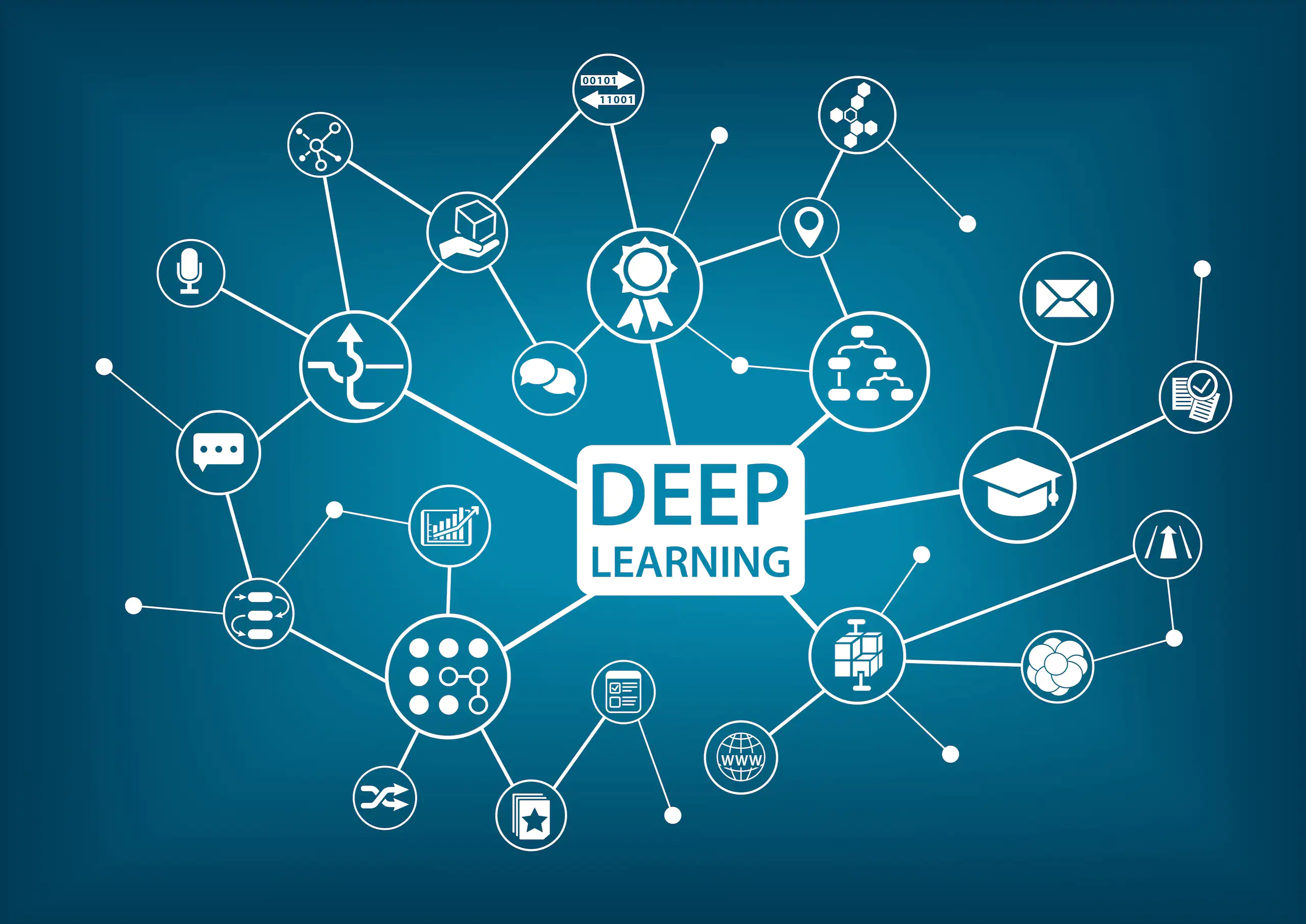
Deep learning is popularly known for being an advanced form of machine learning technology that is also used to integrate AI in mobile apps.
The main work of this technology is crucially used for recognizing images and voices. Additionally, this technology takes into use the intricate neural networks to decode data patterns of the apps.
4] Supervised Learning (SL)
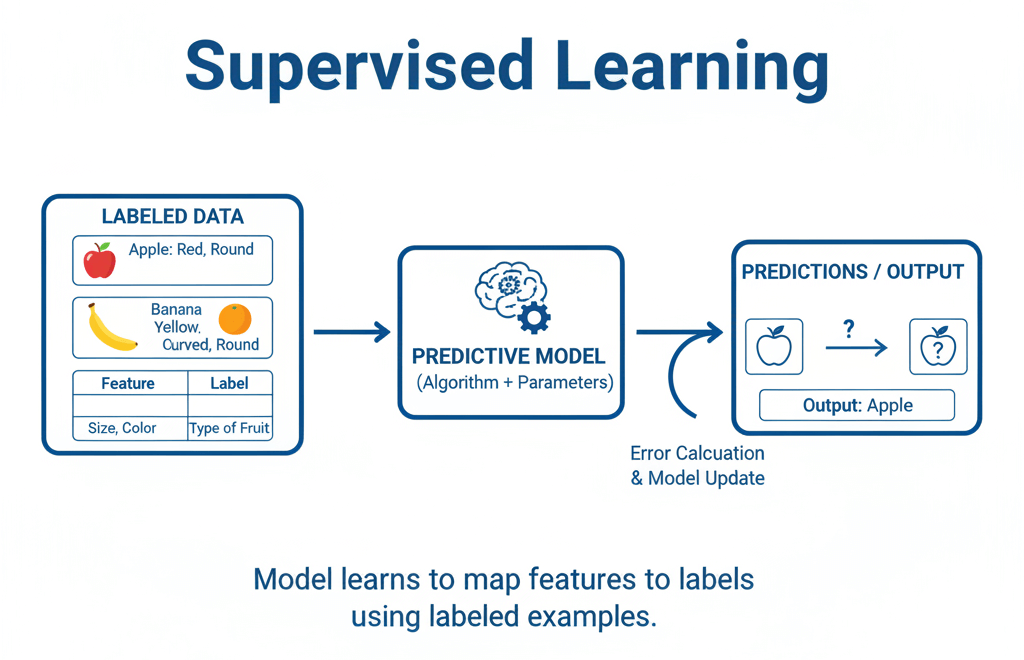
Supervised learning may not be commonly known by many, but it is used while integrating the power of AI into mobile apps.
This technology uses an approach that allows them to train the models by taking advantage of labeled datasets, providing inputs and their associated labels, and predicting outcomes.
5] Unsupervised Learning (UL)
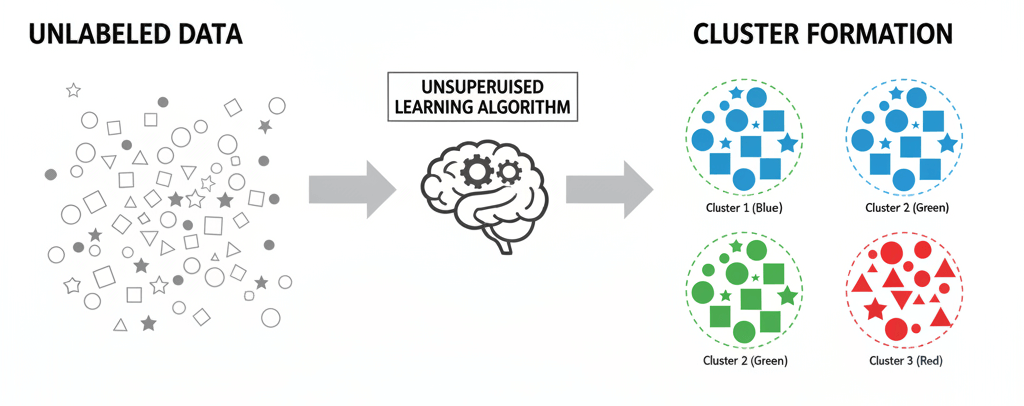
The unsupervised learning uses the approach of model learning from an unlabeled dataset. This technology does not require output labels to find the patterns in the data of the mobile apps.
This technology mirrors the supervised learning technology that we explained just above this.
6] Reinforcement Learning with Human Feedback (RLHF)
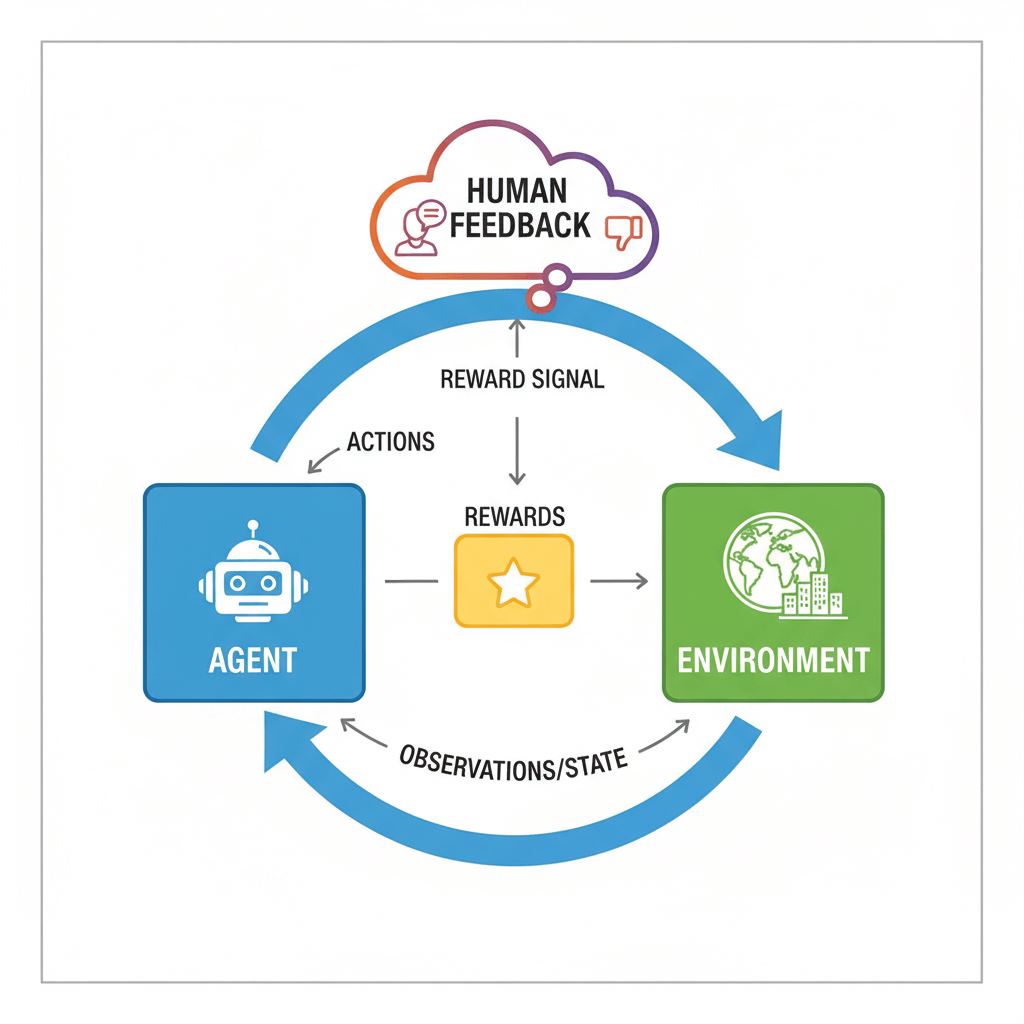
As the name suggests, Reinforcement Learning with Human Feedback clearly explains the requirement of this technology in integrating AI in a mobile app. As humans look for more convenient solutions, this technology can be a game-changer.
It uses the approach by which it enhances the app operation with the feedback received from humans. The human input they received, they merge with reinforcement learning to give output.
7] Neural Network (NN)
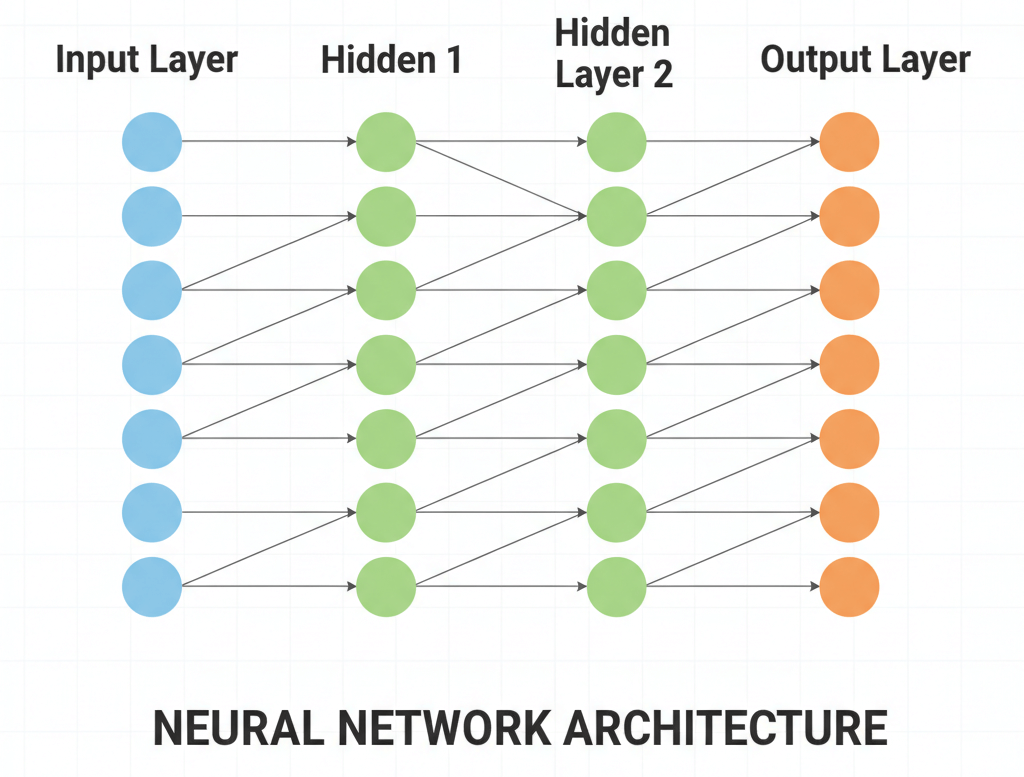
Neural Networks also play a role in integrating the power of AI into mobile apps. They are computing systems designed to mimic the structure of the human brain.
By this, we mean that his smart technology has layers of interconnected nodes that seamlessly work together. It helps the app to learn different patterns and analyze information from the available data.
8] Convolutional Neural Network (CNN)
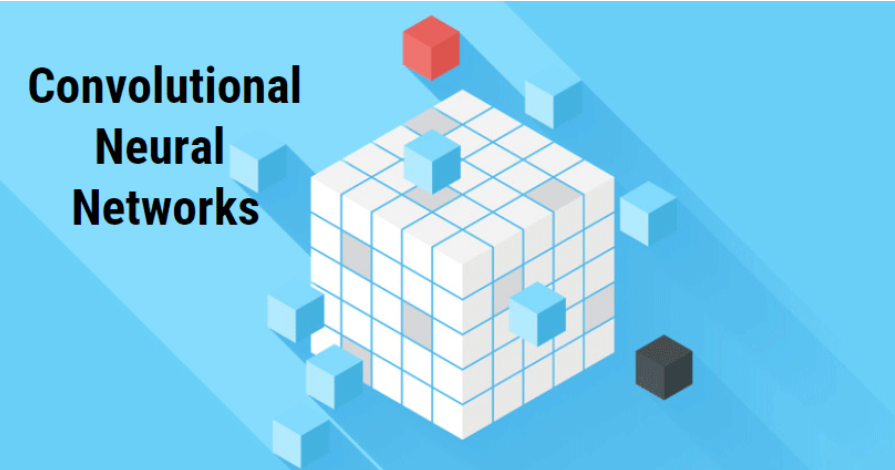
Convolutional Neural Network is a technology that is an advanced form of the above one, i.e., Neural Network. This comes with more advanced working of the smart apps.
This is a neural network variant that uses a specific technology called convolution that is capable of recognizing and classifying picture characteristics. A Convolutional Neural Network is essentially used to analyze images and videos.
9] Recurrent Neural Network (RNN)
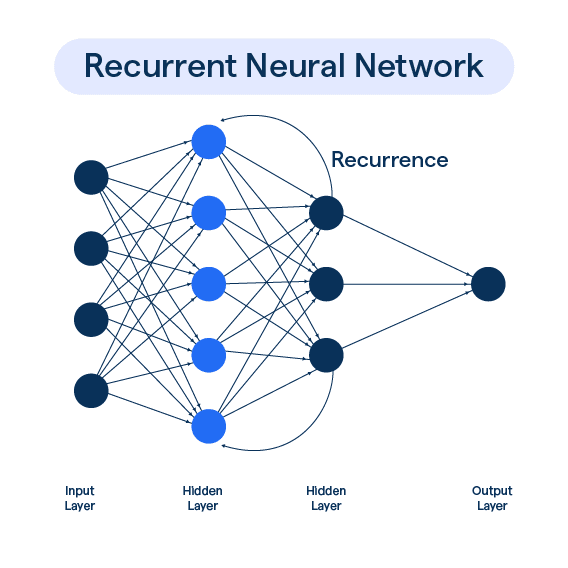
A Recurrent Neural Network is the AI model used in an app to make predictions by remembering the past data or information.
The data that are available in sequence within the app, for example, the sentence in the language or time-based data, this technology works best with them. So, the smart mobile apps need the support of this technology.
10] Large Language Model (LLM)
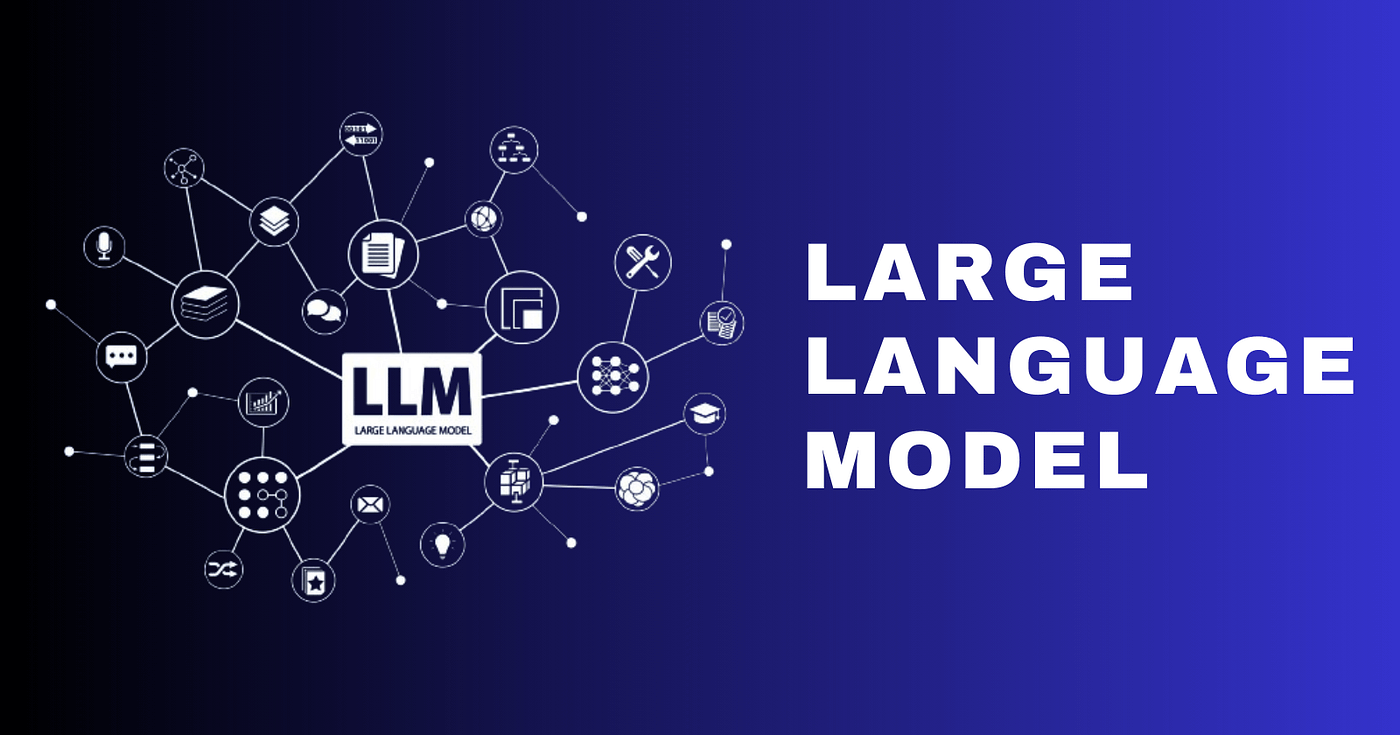
A Large Language Model is an AI-trained technology that processes massive amounts of text and data from mobile apps. This technology is capable of learning the patterns in the language and understanding the questions accordingly.
Further, it generates human-like responses, writes content, translates languages, summarizes information, and can also assist with tasks in different fields.
The Key Challenges of Integrating AI In Mobile Apps
The benefits of AI in mobile apps cannot overcome the challenges that come along with its implementation. While integrating AI into apps, businesses often face strategic, technical, and regulatory problems.
You should know about the challenges since it helps you to address them beforehand, when they arise. We have collected and listed the potential challenges that you may face. Let’s check them one by one.
➢ Risk of Data Privacy
It is one of the concerning challenges that comes with the implementation of AI in mobile apps, which is a risk to data privacy.
This is a problem in the UAE because of the Personal Data Protection Law, which is working actively. This will come with the risk of algorithm bias, unfair profiling, and breach of sensitive data of customers.
Solution: The best solution to overcome this challenge is implementing bias detection frameworks at the time of model training. Use strong data encryption and anonymization methods. And in the end, before deploying the app, ensure to conduct AI ethics audits.
➢ Limited Infrastructure & Legacy System
In the UAE, businesses and enterprises are still using outdated ERP systems and isolated databases. The risk that comes with this challenge for businesses includes poor data flow, a long integration process, and a high chance of failures.
Since the POS system of the retail chain is unable to share real-time data with the AI system, it fails to process the predictive analytics.
Solution: The solution is here for you to overcome this challenge. It is best to migrate to an AI-compatible platform like AWS, Azure, or the UAE region. Update gradually with a modular architecture and to unify information all over the department, use data lakes.
➢ Change of Laws & Regulatory Compliance
UAE is an ever-evolving country where change is constant, as per the requirements. No wonder AI regulation and GCC are rapidly evolving in the UAE.
Additionally, the non-compliance also leads to fines or reputational damage, which is a big challenge for businesses in the UAE. It is crucial to implement AI only after meeting PDPL needs, ethical AI guidelines, or the law of a specific sector.
Solution: The best way to beat this challenge is to appoint a compliance officer who can look over the AI projects. Keep yourself updated via TDRA announcements and UAE ministry updates. You should always maintain the compliance documents for audits.
➢ Implementation Cost is Higher
The AI-powered mobile app development cost is higher than investing in traditional app development, but it comes with long-term growth. This is one of the challenges for small businesses since they don’t have as many assets as other established businesses.
The space where you need to invest to access a custom AI solution is data preparation, model training, and ongoing maintenance.
Solution: To deal with the challenge, the best approach will be to start this journey with AI-as-a-Service (AIaaS) or pre-trained models. To validate ROI before scaling it, it is best to apply the MVP (Minimum Viable Product) approach. Reduce the licensing fees by using open-source AI frameworks.
➢ Shortage of Talent & Skills
There are high chances for you to deal with the problem of a shortage of talent and skills in the field of AI app development. This is because in the UAE, it may be difficult for you to find experienced AI engineers, ML specialists, and data scientists.
This comes with the high risk of project delays, which led you to rely on expensive consultants or poor quality of AI app models. Suppose any firm outsources its AI model development; it can lead to integration issues.
Solution: The best solution to deal with this problem is to partner with universities to access the talent pipeline. Arrange for bootcamps and certification courses on Artificial Intelligence to help the existing team upskill.
You can use the advantage of hybrid development models, as per which you have to rely on offshore coding with the local integration team.
Let’s build your next-gen AI-powered mobile app with the expert support of Nimble AppGenie!
Case Studies Showing the Success of AI Implementation in Dubai
Dubai has successfully integrated the power of AI across its different key sectors. The National Strategy for Artificial Intelligence 2031 (NSAT) plays an important role in Dubai in taking such initiatives.
Here are some case studies below that show the success of AI implementation in Dubai.
● In Transportation and Urban Planning
1] The Roads and Transportation Authority (RTA) of Dubai
As part of the plan, NSAT 2031 aims to make 25% of the transport self-driven by the year 2030. So, Dubai has implemented AI-powered inspection robots like ARIIS to inspect the metro track and infrastructure.
This will save time on manual inspection and boost operational efficiency.
2] Smart City Initiatives
Dubai has leveraged the power of AI to efficiently manage the city’s traffic flow, optimize parking, and build a smart grid that balances energy supply and demand for optimal efficiency.
● Healthcare
1] NABIDH Health Information Exchange
This is the unified health data platform of Dubai. It uses the power of AI for predictive analysis. This adoption will help in analyzing patient data, tracking disease patterns, and forecasting potential health crises.
2] Insilico Medicine
Insilico Medicine is a UAE-based biotech company that has become a pioneer in utilizing the power of AI in the process of drug discovery. This biotech company has developed the world’s first fully AI-generated drug to enter a clinical trial.
● Government and Public Services
1] Dubai Electricity and Water Authority (DEWA)
DEWA has a virtual employee named “Rammas,” which is powered by AI and ChatGPT. The aim of creating this is to improve operational efficiency and customer service.
DEWA is also capable of analyzing data from its smart grid as it has adopted the power of AI and machine learning. This helps them to improve maintenance responses.
2] DubaiNow App
The government of Dubai has taken a smart turn and created an app named DubaiNow, integrating the power of AI technology. This app is home to more than 130 government services, which offer the residents a seamless experience.
Users of this app can access a vast number of services and can do bill payments, license renewals, and everything from the ease of their home.
Nimble AppGenie: Your Next-gen Partner to Build an AI-Powered Smart App
Want to build a next-gen application integrating the power of AI? You must have strong expertise in this sphere, or you must contact a mobile app development company in Dubai that specializes in creating AI-driven and futuristic mobile apps.
It is best to partner with Nimble AppGenie, the leading app development company who have mastered the art of creating futuristic AI mobile apps. From creating the design to launching the smart solution, we help our clients with every step of the development process.
The best thing about us is that we have a team of expert developers who have many years of experience. They use technologies like machine learning, natural language processing, chatbots, and other required options to build an intelligent app.
Conclusion
The smart technology of AI is shaping the future of Dubai, which aims to be the world’s smartest hub. No doubt, the AI mobile apps are helping in bringing digital transformation in the city and taking it closer to achieving its long-term goal.
You know how the AI in mobile apps is helping the businesses of the UAE across different industries to connect with their audiences. Additionally, you know about the group of technologies that help in its successful implementation.
So, the idea is clear whether you are an entrepreneur, a startup, or an enterprise, adoption of an AI-powered app today will define the customer experience tomorrow.
Frequently Asked Questions
Why is Dubai becoming a hub for AI-powered mobile apps?
Several reasons make Dubai an important hub for AI-powered mobile apps. Dubai has recently positioned itself as a global leader in smart city initiatives, innovation, and AI adoption.
Moreover, Dubai's smart infrastructure, thriving startup ecosystem, and innovative government initiatives have made it an ideal place for AI-powered mobile apps.
What are the key technologies required for AI smart apps in Dubai?
The technologies play a crucial role in building smart AI-powered mobile apps. There are various technologies required to integrate AI into smart mobile apps.
The key technologies include machine learning, natural language processing (NLP), computer vision, predictive analytics, chatbots, voice recognition, and AI-driven personalization engines.
How can my business in Dubai benefit from an AI-powered app?
If you have a business in Dubai, the smart city, you must implement the power of AI to get a significant competitive advantage.
By this implementation, the benefits your business will enjoy include improving operational efficiency, better data management, personalized customer experience, providing strategic data, 24/7 customer support, and more.
Are AI mobile apps a cost-effective solution for businesses in Dubai?
Yes, AI mobile apps are, in some way or another, a cost-effective solution for the businesses of Dubai. Initially, it can cost you more to build an AI-powered mobile app than traditional apps, but in the long run, it can be a beneficial investment.
With an AI-powered mobile, businesses can enjoy automation that reduces manpower costs, boosts efficiency, and improves customer retention.